Here's the excuse that ends more good intentions than any other: we don't have the equipment. No gear, no home gym, no space that isn't already full of furniture. It sounds like a real obstacle, right up until you remember that the human body is, itself, a complete workout that never needs to be bought, assembled, or stored.
Every routine below uses nothing but floor space the size of a yoga mat. No gear, no gym, no excuse.
Why bodyweight training isn't the "lesser" option
There's a quiet assumption that bodyweight workouts are the beginner version — something you do until you can afford real equipment. That's backwards, especially for kids. Bodyweight training builds something equipment often skips right past: control. Bodyweight moves don't let you cheat: in a squat or a plank, the whole body has to work together to stay in control, which is exactly the kind of coordination that's most valuable while a kid is still developing it.
The 15-minute living room routine
Start with two or three minutes of easy movement to warm up, like marching in place, arm circles, and gentle leg swings.
Three rounds, minimal rest between exercises, about 30 seconds of recovery between rounds. Fifteen minutes, start to finish, and it hits the whole body:
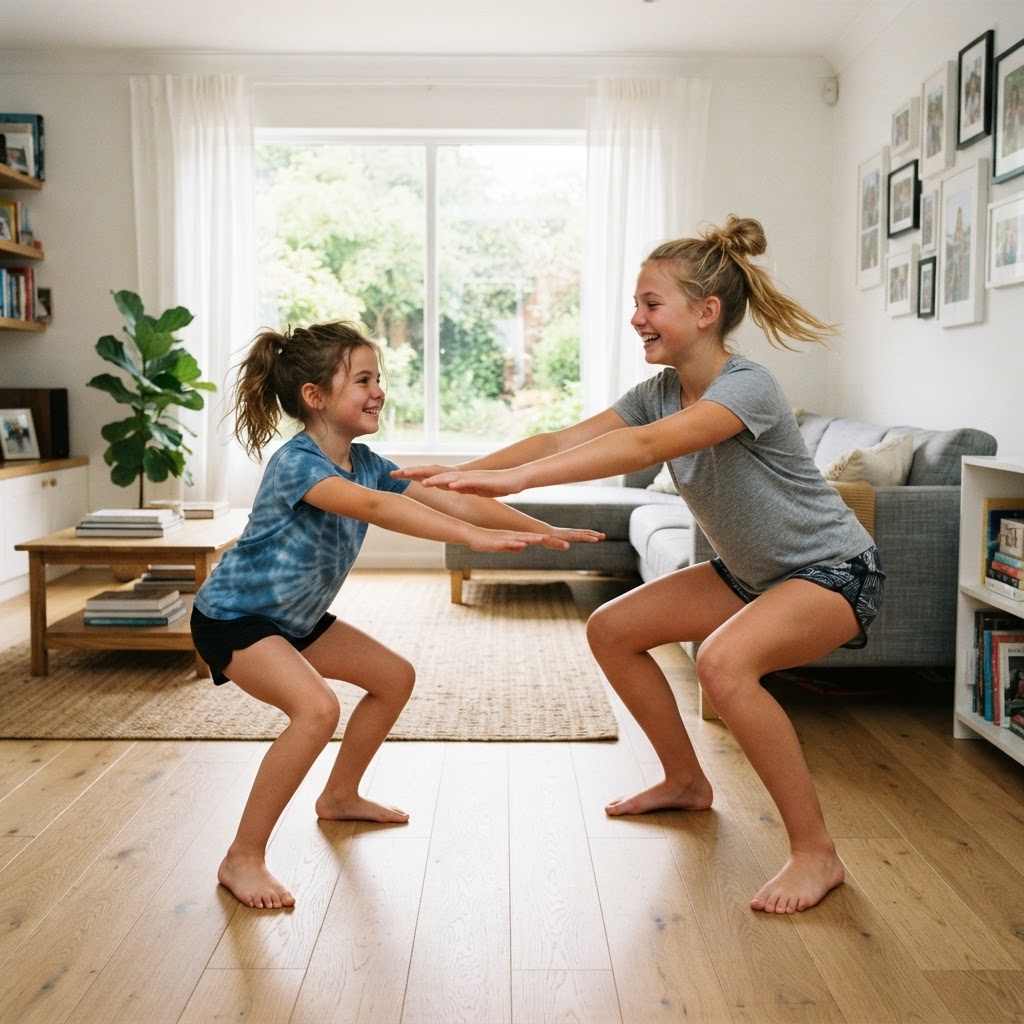
Bodyweight squats — 12 reps. Feet shoulder-width, chest up, sit back like reaching for a chair. This is the foundation move of the whole routine — most other lower-body strength traces back to a good squat pattern.
Push-ups — 8 reps (knees down is a completely legitimate variation). Hands under shoulders, straight line from head to heels. The knee-down version isn't a lesser version — it's the right version until the full one can be done with good form, and rushing past that step is how bad habits get baked in.
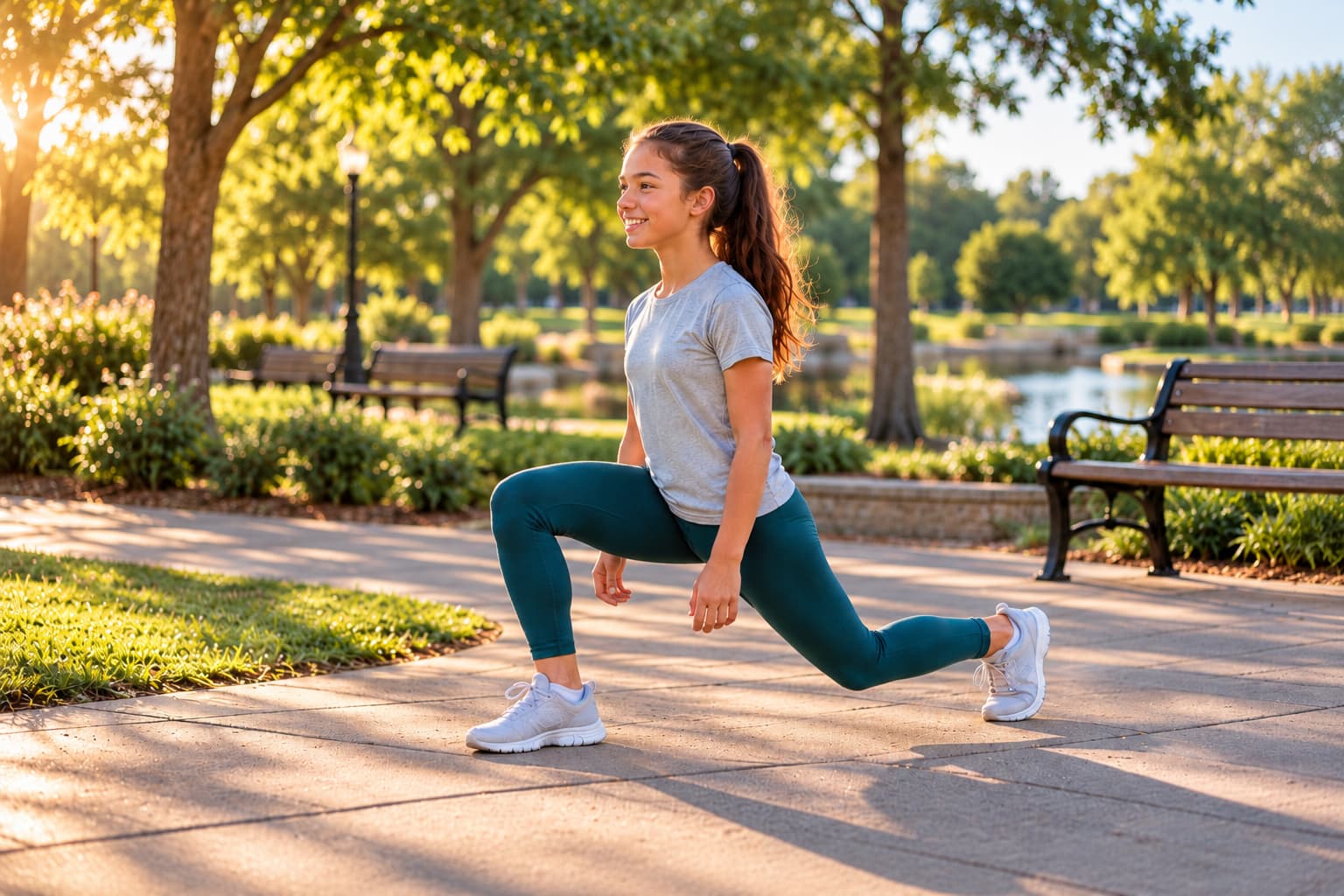
Reverse lunges — 8 per leg. Step back, drop the back knee toward the floor, push through the front heel to stand. Builds single-leg strength and balance, which most sports actually depend on more than raw two-legged power.
Plank hold — 20 to 30 seconds. Forearms and toes, straight line from shoulders to ankles, no sagging hips. This is a core stability move, not an ab move — the goal isn't to feel a burn, it's to keep everything rigid.
Mountain climbers — 20 seconds. Plank position, drive knees toward the chest quickly, alternating. This is the cardio spike in an otherwise strength-focused routine.
Run all five, rest 30 seconds, repeat two more times. That's the whole workout — no setup, no teardown, no equipment closet.
Making it work for a genuinely busy week
Keep a version on the fridge or the family group chat. The routine above written out somewhere visible removes the "what should we even do" friction that kills more workouts than lack of motivation ever does.
Fifteen minutes beats a missed hour. A busy family doesn't need a perfect training plan — it needs a plan that survives contact with a Tuesday. Fifteen minutes, three times a week, done consistently for a month beats an ambitious hour-long plan that gets skipped after week one.
Do it together when you can. A parent doing the same squats alongside a kid removes almost all the "why do I have to" energy — it becomes something the family does, not something the kid is assigned.
Small spaces are a feature, not a limitation. All five moves fit in roughly a six-foot square. A living room, a hotel room, a backyard patch of grass — the routine travels anywhere the family goes.
The takeaway
Equipment was never really the obstacle. A living room, fifteen minutes, and a body that's ready to move is a complete gym. The families who stay consistent aren't the ones with the best home setup — they're the ones who removed every possible excuse standing between "we should work out" and actually doing it.